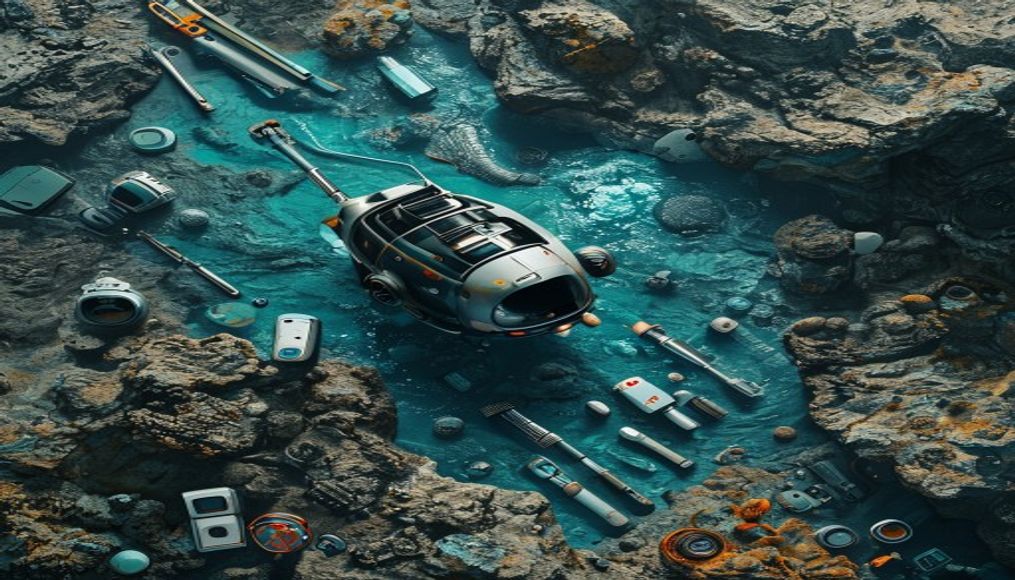
Inexpensive Seafloor Tech Unlocks Ocean’s Hidden Treasures
Imagine exploring a wild landscape that’s deeper than any mountain range is tall and as mysterious as a distant planet—except it’s right here on Earth, under the ocean. Now, imagine if the tools to explore that world didn’t cost hundreds of millions of dollars, but a fraction of that. That’s what’s happening with inexpensive seafloor-hopping submersibles today, transforming deep-sea exploration and mining in ways none of us expected.
—
Key Takeaways
- Inexpensive seafloor submersibles can map thousands of square miles of ocean floor cheaply and quickly.
- These robotic explorers are accelerating the search for critical minerals essential for clean energy technologies.
- Lower-cost technology invites more players into deep-sea science, democratizing ocean research.
- However, increasing deep-sea access raises serious environmental and ethical questions about underwater mining.
- Understanding this emerging tech helps industries prepare for a future where underwater resources may become as accessible as land-based ones.
—
The Full Story
The US National Oceanic and Atmospheric Administration (NOAA) recently embarked on a significant expedition between Australia and South America to map over 8,000 square nautical miles of the Pacific seafloor. But instead of the usual expensive manned submersibles, NOAA is using a fleet of small, inexpensive seafloor-hopping drones. These submersibles don’t just poke around; they ‘hop’ along the seabed like mechanical frogs, collecting high-resolution images and sensor data while scouting for vital mineral deposits like cobalt, nickel, and rare earth elements.
At first glance, reducing costs sounds like an engineering success story. But it’s a paradigm shift, because the ocean floor, which covers 70% of Earth’s surface (according to NOAA), has long been one of the last frontiers restricted to a handful of governments and corporations that could afford billion-dollar vessels and deep-diving submarines.
Today’s inexpensive seafloor tech can unlock massive new data sets with pushes from smaller research teams or companies. This tech dramatically increases the scale and frequency of ocean mapping, a move urgently needed as the global demand for minerals required for electric vehicles, batteries, and renewable energy storage soars — the International Energy Agency reports demand for these minerals could increase by over 300% by 2040 source.
While NOAA’s Rainier is a critical platform, these lightweight submersibles extend the reach beyond flagship vessels, making it possible to explore previously overlooked or inaccessible regions. Yet what NOAA or companies won’t openly say is that this flood of new data sets the stage for commercial deep-sea mining on an industrial scale — a move that could have immense geopolitical and environmental implications.
—
The Bigger Picture: Why Now?
We’re witnessing a wave similar to what happened with drone technology in the last decade. Initially, drones were expensive tools for militaries and scientists, much like submersibles were limited to government-led oceanography. Fast forward to today, and drones are everywhere—from photography to agriculture—because cost and ease-of-use dropped dramatically.
The same thing is underway for deep-sea exploration. Over the past six months, a few notable developments have emphasized this trend:
1. China’s unveiling of a fleet of affordable seabed drones aimed at mapping the national maritime zones.
2. The launch of an EU-backed initiative for low-cost autonomous underwater vehicles (AUVs) focused on ocean conservation.
3. A spike in venture capital funding targeting startups building tech for ocean resource extraction.
The timing matters because the race for critical minerals is heating up against a backdrop of tightening climate targets and geopolitical tensions around supply chains. Think of inexpensive seafloor tech as the equivalent of the early internet cables — once laid, they changed everything by making data flow faster, cheaper, and globally accessible. Here, the new tech is the cable; the ocean floor is the network, and the minerals are the data packets everyone needs.
—
Real-World Example: Sarah and the Ocean Tech Startup
Sarah runs a 12-person startup called BlueMapper, specializing in environmental monitoring for offshore wind farms. Before, her team relied mostly on expensive satellite data and hired expensive charter vessels with manned submersibles for seabed analysis, ballooning project costs.
Now, Sarah leases a fleet of inexpensive seafloor hopper drones that map the ocean floor under prospective wind farm sites at a fraction of the previous price — about $10,000 per unit per month versus hundreds of thousands for manned expeditions. This leap enables her team to deliver more precise seabed mapping and ecological impact assessments faster, helping clients minimize risks and speed up permits.
For Sarah, inexpensive seafloor tech has been a game changer that lets a small business compete against huge conglomerates, while also enabling more detailed, frequent data collection to protect marine habitats.
—
The Controversy or Catch
With great power comes, well, deep concerns. While inexpensive seafloor robots open up unprecedented access, environmentalists warn that rapid expansion of seabed mining could wreak havoc on fragile ecosystems. The ocean floor hosts unique, often endemic species, many yet undiscovered—disturbing this habitat with mining operations could lead to irreversible biodiversity loss.
Critics also point to regulatory gaps. The current international legal framework—the United Nations Convention on the Law of the Sea (UNCLOS)—was mainly designed before recent tech advances and may not keep pace with the scale of industrial activity now possible. Questions remain: How do we balance national sovereignty, commercial interests, and environmental protection? Who pays if mining causes harm?
Finally, there’s a geopolitical chess game beneath the waves: countries racing to stake claims on resource-rich underwater zones could spur tensions or conflicts. Cheap submersibles suddenly turn once-inaccessible areas into hotly contested grounds.
To complicate matters, the public often overlooks the energy and carbon footprint of deep-sea mining operations themselves. Extracting minerals from the ocean isn’t automatically “green” if it requires vast ship fleets, fuel, and infrastructure.
—
What This Means For You
Whether you’re a business owner, investor, or ocean enthusiast, here’s what you can do right now:
1. Stay informed: Follow updates from credible sources like NOAA and the International Seabed Authority regarding new tech and regulations. Knowledge is power.
2. Evaluate supply chains: If your business depends on batteries or tech components, start assessing exposure to minerals sourced from ocean mining. Diversify suppliers to reduce risks.
3. Support sustainable innovation: Engage with startups or organizations developing environmentally responsible seabed exploration technologies. Your voice or investment can push for greener practices.
—
Our Take
The surge in inexpensive seafloor technologies is an exciting breakthrough that opens valuable scientific and economic opportunities, but it’s not a silver bullet. The ocean remains one of Earth’s most delicate frontiers. Without cautious, transparent governance and environmental safeguards, this tech could trigger unintended damage on a planetary scale. As cost barriers fall, the urgency to balance exploration with conservation grows.
We believe embracing these submersibles for science and industry is inevitable — but only if done with humility, respect for marine ecosystems, and a willingness to evolve regulations fast enough to keep pace. This isn’t just about mining minerals; it’s about mining knowledge while protecting a world beneath our waves that most people don’t yet realize they depend on.
—
Closing Question
As inexpensive seafloor tech accelerates exploration and mining, how should we balance unlocking ocean resources with protecting fragile marine ecosystems? Where do we draw the line?
—
You Might Also Enjoy
More on PromptTalk
“How Advances in Ocean Robotics Are Shaping Climate Research”