Asylon and Thrive Logic Bring Physical AI to Security Edge
Enterprise security is about to get smarter, thanks to the new partnership between Asylon and Thrive Logic. These two companies are teaming up to bring physical AI to perimeter security, blending robotics with advanced AI analytics. But what exactly does that mean, and why should you care?
Key Takeaways
- Asylon and Thrive Logic combine robots with AI for smarter perimeter security.
- Physical AI enables autonomous patrols paired with real-time threat analysis.
- This fusion could revolutionize how businesses protect their most valuable assets.
- Real-world impacts include faster response times and fewer false alarms.
- Physical AI is an emerging field with growing potential across industries.
What Is Physical AI in Perimeter Security?
Physical AI refers to the use of intelligent machines—like robots—that don’t just sense their environment but also make decisions and act on them independently. In the context of enterprise perimeter security, it means robots patrolling a site on their own, spotting threats using sensors and AI, then alerting human teams or even responding directly.
With Asylon’s robotics expertise and Thrive Logic’s AI-driven security platform, these patrol bots go beyond simple camera systems or static alarms. They combine real-time agentic AI analytics—that is, AI that acts with some autonomy—with physical presence at the security edge, making detection and response quicker and more accurate.
How This Partnership Changes the Game
Traditionally, perimeter security relies on cameras, motion detectors, or guards. Cameras can miss subtle cues, and guards can’t watch every inch all the time. Physical AI patrols can cover ground consistently and analyze data on the fly.
Thrive Logic’s platform processes complex data streams and feeds actionable intelligence to Asylon’s robotic hardware. That means if something looks suspicious—a broken fence, unusual movement—the robot doesn’t just record it; the AI evaluates potential risk instantly and sounds an alarm or notifies security staff.
This reduces false positives and allows quicker, smarter responses. Also, these technologies can learn from patterns, improving over time.
Real-World Example: Physical AI in Action at a Large Warehouse
Imagine a big warehouse storing electronics. Theft or vandalism is a constant worry, and traditional security had limited coverage overnight. By using a physical AI patrol system similar to what Asylon and Thrive Logic are building, the warehouse deployed autonomous robots to roam aisles and monitor the perimeter.
One night, a robot detected unusual movement near a delivery bay. The AI flagged the behavior as potentially suspicious and sent an alert with real-time video to security staff. The security team acted immediately to intercept, preventing a break-in.
This kind of scenario is just one example of how physical AI can enhance security beyond traditional setups.
What This Means For You
Even if you’re not running a large enterprise, the rise of physical AI in security signals a shift towards smarter, more proactive safety technology everywhere—from office buildings to schools and residential complexes.
Businesses leveraging solutions like those by Asylon and Thrive Logic benefit from enhanced protection with less human error. For consumers, this could lead to technologies like autonomous neighborhood patrol bots or smarter home security in the future.
It’s also a chance for businesses to rethink security budgets—investing in AI-driven patrols might reduce the need for extensive human patrols and lower false alarm costs.
Challenges and Considerations
While promising, physical AI must navigate privacy concerns, system reliability, and integration complexity. Enterprises need to ensure these robots operate within legal boundaries and respect data protection laws.
Moreover, the technology must be robust against hacking or malfunction to avoid vulnerabilities. Yet, with careful deployment and ongoing improvements, these hurdles are manageable.
Why Keep an Eye on Asylon and Thrive Logic?
This partnership is a clear sign of AI moving from digital-only domains into the physical world, tackling real-world security challenges. It shows how robotics and AI can complement each other to create smarter, more autonomous systems.
As demand for safer, more efficient security grows, these innovations set the stage for the next generation of enterprise safety.
Curious to learn more about AI’s role in security? Check out More on PromptTalk for a deeper dive into AI-powered surveillance breakthroughs.
What Do You Think?
Have you encountered physical AI technologies in your workplace or community? What do you think about robots helping keep areas safe? Drop your thoughts and questions below—we’d love to hear from you!
—
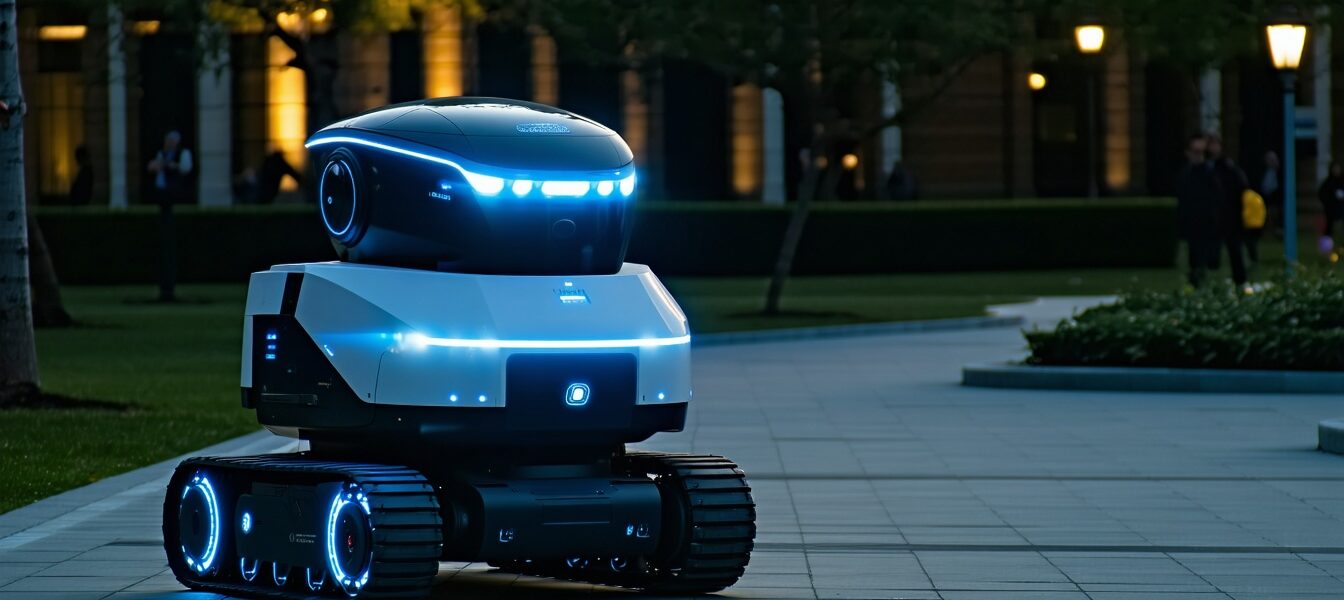
Image: Autonomous security robot patrolling a modern corporate campus. Alt text: “Physical AI robotic patrol enhancing enterprise perimeter security”
—
For further reading on physical AI in security, visit this AI News article from a trusted source.