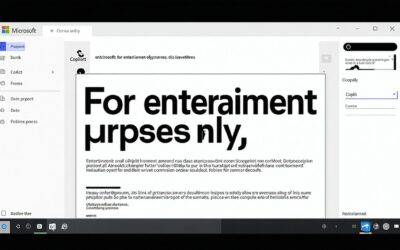
Copilot Is ‘For Entertainment Purposes Only,’ Says Microsoft
Artificial intelligence tools like Copilot promise to transform how we work and create. But did you know Microsoft’s terms of use actually say Copilot is ‘for entertainment purposes only’? This phrase has stirred up quite a bit of discussion about how much we should trust AI tools—and what it really means for everyday users.
Key Takeaways
- Microsoft states Copilot is “for entertainment purposes only” in its terms.
- AI companies often caution users not to blindly trust AI-generated outputs.
- This highlights the gap between AI capabilities and real-world reliability.
- Understanding these limits helps users make smarter decisions about AI tools.
- AI is powerful, but we shouldn’t treat it as an infallible assistant—yet.
What Does ‘For Entertainment Purposes Only’ Mean According to Microsoft?
At first glance, the phrase makes it sound like Copilot is just a fun toy—not a serious work tool. But it’s really a legal safeguard for Microsoft. By saying outputs are “for entertainment purposes,” Microsoft limits its liability if Copilot generates mistakes or misleading information.
This means Microsoft is openly warning users: don’t take Copilot’s answers as gospel. Instead, think of it as a helpful assistant who can sometimes mess up. This isn’t unique to Microsoft—other AI services have similar disclaimers to protect themselves from the unpredictable nature of AI-generated content.
Why AI’s Limitations Matter More Than Ever
AI models like Copilot are trained on massive amounts of text. They generate responses based on patterns, not understanding. So even if an answer seems confident, it might be incorrect, incomplete, or biased.
For example, Copilot might provide code that looks perfect but contains subtle errors, or it might generate natural-sounding text that’s factually wrong. By reminding users that it’s “entertainment,” Microsoft encourages caution.
This self-awareness is critical. It encourages users to think critically and double-check AI outputs instead of blindly trusting them. As AI tools become more integrated into workflows, understanding these limits helps prevent costly errors.
A Real-World Example: AI in Legal Research
Consider a small law firm using AI to draft contracts. They might rely on an AI assistant similar to Copilot to generate clauses or suggestions. Without thorough review by a qualified lawyer, an AI mistake could lead to a poorly drafted contract—costing clients time and money.
I heard about one solo attorney who tried using AI-generated contract templates but found many clauses were outdated or didn’t comply with local laws. Fortunately, she caught these errors before signing. Microsoft’s “for entertainment” warning would have been very relevant here—trusting AI blindly in life-impacting fields is risky.
What This Means For You
If you’re using Copilot or similar AI tools, here are some practical tips:
- Double-check AI outputs: Always review and verify information or code generated.
- Don’t rely on AI for critical decisions: Use it as a starting point, not a final answer.
- Understand your tools’ limits: Learn the disclaimers and legal notes to avoid surprises.
- Keep your skills sharp: AI is a tool, but human judgment is irreplaceable.
Microsoft’s warning is actually helpful. It reminds us that while AI can speed up tasks and inspire ideas, it’s not perfect and won’t replace careful human oversight anytime soon.
How Does This Impact AI’s Future?
These disclaimers show the growing pains of AI adoption. We’re in a phase where powerful AI exists, but reliable, fully trustworthy AI hasn’t arrived yet. Companies are protecting themselves legally, and users are learning to approach AI outputs thoughtfully.
As models improve, we’ll likely see fewer disclaimers like this and more confidence in AI’s accuracy. Until then, Microsoft’s terms are a useful reminder for everyone.
Join the Conversation
Have you ever trusted an AI tool and been surprised by the outcome? Or maybe you use Copilot and have your own tips for staying safe? I’d love to hear your experiences and thoughts—drop a comment below!
—
You might also enjoy: More on PromptTalk
—
References
For more on AI limitations and legal disclaimers, check out this TechCrunch article and the OpenAI Usage Guidelines.
—
Image alt text: “Copilot AI assistant for entertainment purposes only”