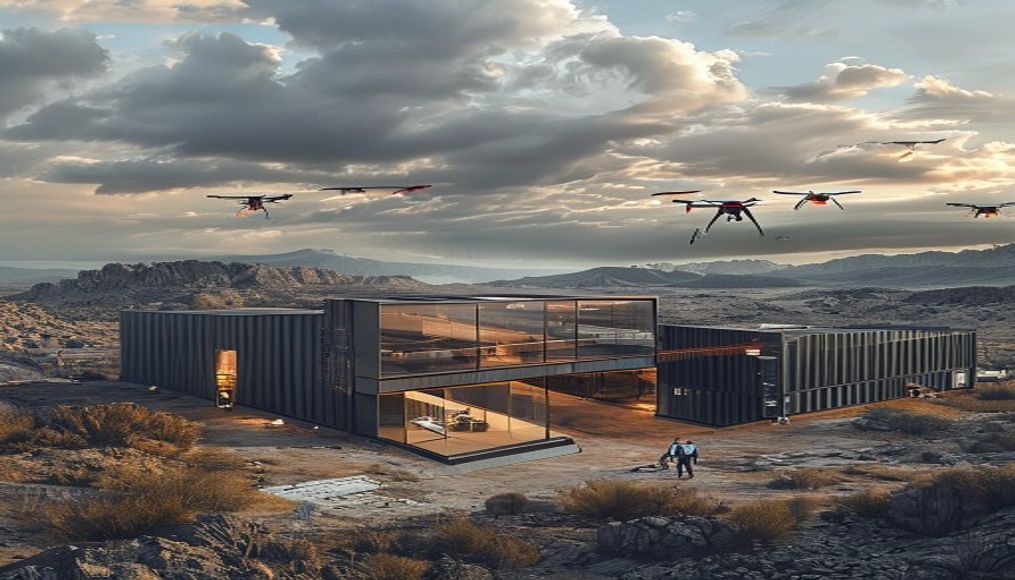
Firestorm Labs: Drone Factories Unpacked on the Front Lines
Imagine a fully equipped drone factory packed inside a shipping container, rolling up to a battlefield or disaster zone, ready to produce custom drones on demand. That’s no sci-fi tale but what Firestorm Labs is building today. They just raised $82 million to push this vision deep into real-world military and emergency operations—and it’s stirring quite a buzz.
—
Key Takeaways
- Firestorm Labs is pioneering mobile drone factories inside shipping containers, enabling on-site rapid drone manufacturing.
- The $82M funding round signals strong investor confidence in front-line drone production as a strategic advantage.
- This tech could shift military logistics by reducing the need for complex supply chains in hostile or remote areas.
- Firestorm’s approach aligns with trends toward decentralization and agility in defense technology.
- Potential civil applications exist in disaster relief and remote infrastructure maintenance.
—
The Full Story
Firestorm Labs recently secured an $82 million funding round to expand its vision of placing drone manufacturing units directly in conflict zones or emergency areas via modified shipping containers. Their pitch: bring drone production closer to the point of need, cutting lead time and supply chain vulnerabilities. Rather than relying on centralized factories across continents, these mobile units allow troops or responders to build specialized drones tailored for evolving scenarios.
What they don’t say outright is how this might reshape battlefield resilience. Traditionally, front-line forces face delays because replacement drones or parts have to be shipped from far-off factories. For instance, a 2023 NATO report highlighted that 38% of drone losses in conflict stem from logistical delays rather than combat damage. Firestorm’s solution tackles this head-on.
Cutting through the buzz, this $82 million funding—backed by major investors—is a bet on agility in military tech. It mirrors an industry pivot towards modular, scalable, and rapidly deployable systems. The global defense drone market itself is predicted to grow at nearly 13% annually through 2028 according to MarketsandMarkets, showing why investors want in early source.
Firestorm Labs also hints at potential civilian uses, like deploying drone factories to aid disaster zones where infrastructure is crushed and timely air support is vital. The implications stretch beyond warfare.
—
The Bigger Picture
Firestorm Labs’ approach fits into a larger pattern of decentralizing manufacturing and pushing tech closer to where it’s needed—a concept sometimes called “edge manufacturing.” The idea is like having a mini factory “pop-up” wherever action demands, instead of shipping finished products halfway across the world.
In the past six months alone, we’ve seen parallel moves:
- Ghost Robotics unveiled portable robot assembly kits to rapidly deploy ground bots in tough terrain.
- Skydio partnered with the U.S. military to trial autonomous drone swarms launched from mobile platforms.
- DARPA launched a program to create on-demand, modular factories capable of producing a range of unmanned vehicles.
Think of it like a food truck versus a restaurant. Instead of waiting for a meal shipped from a distant kitchen, you get freshly made food right by your side, customized to your taste on the spot. Firestorm is bringing that freshness and flexibility to drone manufacturing.
Why now? Conflicts and emergencies are becoming more unpredictable and fast-moving. Rigid supply chains can’t keep up. Advances in 3D printing, AI-driven design, and compact factory tech now make this vision practical.
—
Real-World Example
Let’s zoom in on a hypothetical but plausible case: Captain Lisa Ramirez commands a special operations unit deployed in a mountainous border region where enemy drones frequently interfere with missions. Historically, if one of their surveillance drones crashed, replacements took days to arrive because the nearest drone factory was thousands of miles away.
Thanks to a Firestorm mobile drone factory convoy stationed nearby, Captain Ramirez’s team now prints customized drone parts and even assembles complete drones overnight. When a new enemy countermeasure showed up, her operators tweaked drone software and hardware right there, testing versions without waiting weeks for upgrades.
This shift saved lives and ensured operational continuity. Beyond military use, a wildfire response team in California could bring a drone factory onsite to quickly build aerial units specialized for smoke reconnaissance and firefighting spray before a blaze worsens.
—
The Controversy or Catch
No advance in defense tech is without debate. Critics question if deploying drone factories close to fighting zones raises security risks. Could these containers be targeted or captured by adversaries? How ironclad is the protection for intellectual property and sensitive designs on-site?
There are also worries about proliferation. Easier drone manufacturing could mean that non-state actors or hostile groups get hands-on access, potentially escalating drone warfare.
Environmental impact is another blind spot. Mobile factories might increase energy consumption and material waste if not carefully managed, challenging sustainability efforts already underway in defense sectors.
Plus, many unanswered technical challenges remain. Can these factories truly operate reliably in harsh weather, unstable infrastructures, or electronic warfare environments without frequent maintenance? These questions don’t get headline attention but are critical to fully assessing Firestorm’s practical merits.
—
What This Means For You
Whether you’re in tech, defense contracting, or even disaster management, here are three concrete action steps:
1. Stay updated on modular manufacturing trends—sign up for newsletters like Defense One or MIT Technology Review for fresh insights.
2. Assess your organization’s supply chain vulnerabilities and explore pilot programs using mobile or on-site manufacturing tech.
3. Consider ethical and regulatory implications. Engage with policy discussions about drone manufacturing controls and battlefield security.
These steps prepare you to spot opportunities and risks as mobile drone factories become more mainstream.
—
Our Take
Firestorm Labs isn’t just envisioning a new way to build drones—they’re testing a new logistics paradigm for defense and relief operations. While the hype around agility is warranted, the devil is in the details: security, reliability, and ethical use.
We believe the promise outweighs the challenges but only if Firestorm and its backers invest heavily in robust safeguards against misuse and operational failures. This funding round gives them a solid runway to prove real-world feasibility.
It’s a fascinating story about how manufacturing itself is becoming a frontline technology—not just the finished drones.
—
Closing Question
As Firestorm Labs rolls drone factories onto front lines, how do you think this will change the balance between rapid innovation and battlefield security?
—
You Might Also Enjoy