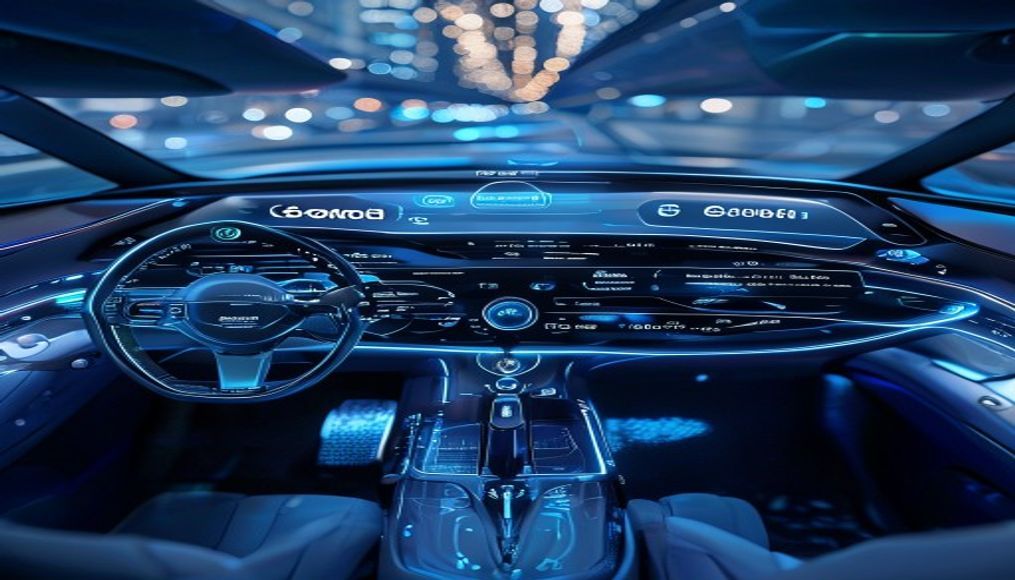
Google Gemini: The AI Assistant Steering Millions of Cars
Opening Hook
Imagine your car not just navigating streets but also holding a chat as naturally as your best friend. This isn’t a sci-fi fantasy anymore. Google’s latest AI, Gemini, is gearing up to become the co-pilot millions of drivers didn’t even know they needed — all embedded inside their vehicles.
Key Takeaways
- Google Gemini will roll out in millions of cars with Google built-in, promising smarter and more conversational driving experiences.
- This upgrade marks a shift from basic voice commands to interactive AI that can understand context and multitask.
- The rollout follows GM’s pilot program, signaling a major industry push toward AI-powered in-car assistants.
- Experts predict this move could reduce distracted driving by offering seamless voice interactions and proactive assistance.
- Privacy and data security concerns remain a key debate point as AI systems gather more in-car information.
—
The Full Story
Google announced its plan to embed Gemini, its next-generation AI assistant, into millions of vehicles equipped with Google’s automotive platform. Unlike the familiar Google Assistant that many already use, Gemini promises deeper conversation, better context awareness, and proactive help while driving.
What does this really mean? For starters, Gemini turns your car’s infotainment system into a virtual companion rather than a simple voice command tool. Instead of struggling with complex or clunky voice commands, drivers can engage naturally—asking follow-ups, getting personalized suggestions like adjusting routes around traffic, or planning stops without distraction.
Behind the scenes, Google has been training Gemini using its extensive language and multimodal models to better understand the nuances of human speech mixed with the specific needs of drivers. The AI isn’t just reactive; it anticipates needs. For example, it might remind you about your next calendar event and suggest charging stops along the way if you’re driving an electric vehicle.
This rollout follows General Motors’ announcement just days earlier that Gemini will debut in select Chevrolet and Cadillac models starting this year. GM’s engagement signifies one of the most significant endorsements for AI integration in vehicles, positioning Gemini as a frontrunner to replace conventional car assistants.
Data from McKinsey highlights that by 2030, smart in-car assistants could influence the decisions of over 80% of drivers globally, reshaping how we interact with vehicles and digital services on the road—making the timing critical for companies like Google to lead.
But Google is playing the long game here. By embedding Gemini now, the company isn’t just improving voice commands; it’s planting a future platform that could evolve with autonomous driving, predictive analytics, and personalized experiences right inside your vehicle.
The Bigger Picture
The launch of Gemini in millions of cars taps into a growing wave of automotive AI innovation. Over the past six months, several major developments have underscored why “smart cars” are becoming more than a buzzword:
1. Tesla updated its Full Self-Driving beta with more human-like conversational feedback, improving driver trust.
2. Apple unveiled CarPlay with deep AI enhancements to offer contextual app suggestions and voice multitasking.
3. Hyundai announced plans to integrate AI assistants to manage complex route planning alongside smart home connectivity—all seamlessly from the dashboard.
Think of this shift like upgrading from a flip phone to a smartphone. Early voice assistants were like having a basic voice dialer—limited and frustrating. Gemini, in comparison, is akin to having an AI-powered personal assistant in your pocket, but now it’s in your car’s cockpit, navigating your schedule, traffic, and entertainment needs without lifting a finger.
This matters now more than ever because the auto industry faces mounting pressure from stricter safety regulations and consumer demand for distraction-free driving technologies. Integrating sophisticated AI like Gemini helps manufacturers meet these challenges while opening doors to new revenue streams like subscription-based AI features and targeted services on the move.
Moreover, with McKinsey noting a 41% increase year-over-year in consumer interest in AI-driven automotive features, companies that delay adopting advanced assistants risk losing competitive edge.
Real-World Example
Take Sarah, who runs a 12-person marketing agency in Austin. She commutes two hours daily in an electric SUV equipped with Google Gemini. Before, she found her drive stressful—constantly glancing at her calendar or switching music apps while trying to focus on the road.
Since Gemini’s arrival, Sarah tells us her car acts almost like a co-worker. “I’ll say ‘Gemini, what’s first on my schedule today?’ and it replies with my meetings and travel time. If I’m low on battery, it suggests the nearest charging stations and whether I have enough time for a quick coffee break.”
For Sarah, this AI integration has reduced distractions, making her drive safer and more productive. She also uses it to manage calls and messages hands-free, catching up on client emails verbally while keeping her eyes on the road.
Her experience illustrates how Gemini’s conversational capabilities can transform a daily grind into a smoother, more connected journey—without adding stress.
The Controversy or Catch
But it’s not all smooth sailing. AI in cars raises big questions about privacy, data security, and control. Critics worry that embedding Gemini so deeply means Google is collecting sensitive personal data from users’ driving habits, locations, and even conversations.
There’s also skepticism about how much autonomy should be handed to AI in safety-critical scenarios. Can an AI really know when to intervene during complex driving situations? How transparent is the AI’s decision-making?
Furthermore, legal frameworks around who owns and is responsible for data collected by in-car assistants remain murky. A recent MIT Technology Review report warns the lack of industry-wide standards could expose drivers to surveillance risks and data misuse.
We also can’t ignore potential tech glitches. AI misinterpreting commands or failing to detect important user cues could lead to frustration or even accidents. As with all AI assistants, the risk of bias or errors is ever-present, demanding rigorous testing and oversight.
Lastly, there’s the question of access. Will advanced AI like Gemini become a premium feature accessible only in high-end or newer models, widening the tech gap on roads and potentially creating disparities in safety benefits?
What This Means For You
Here’s what you can do this week if you’re intrigued by Google Gemini rolling out to cars:
1. Check your vehicle’s compatibility: Visit your carmaker’s website or Google’s automotive page to see if Gemini could be coming to your model soon.
2. Update your infotainment system: Installing the latest updates might be required to enjoy new Gemini features, so ensure your system is current.
3. Explore privacy settings: When Gemini arrives, dive into its privacy controls. Limit data sharing options and understand what info is being collected.
Taking these steps ensures you’re ready to experience smarter driving with Gemini while keeping control over your data.
Our Take
Google’s Gemini is a bold step forward for AI in vehicles, edging much closer to true conversational assistants rather than command-and-control gadgets. It’s impressive how the technology blends deep learning with real-world driver needs to improve safety and convenience.
However, the real challenge won’t be technological. It’s about trust and transparency—can Google balance innovation with protecting user privacy in a car setting where stakes are high? If done right, Gemini could shift driving from a hands-on task to a hands-free, mind-free experience in many ways.
Closing Question
As AI assistants like Google Gemini become part of our daily drives, how much control are you willing to hand over to an AI co-pilot on the road?
You Might Also Enjoy
—
External Reference: McKinsey report on AI in automotive (https://www.mckinsey.com/industries/automotive-and-assembly/our-insights/the-future-of-ai-in-automotive)